




Ukraine: Adopted list of products where denatured ethanol is used and the list of denaturing additives

The Cabinet of Ministers of Ukraine approved technical regulations on eco-design requirements for various energy consuming products.
As of 21 February 2020, manufacturers and importers of office and household electrical equipment in Ukraine have to comply with the adopted ecodesign requirements. The Cabinet of Ministers of Ukraine approved technical regulations on ecodesign requirements for the following products:
Order No. 118 dated 03/12/2019 approved the Requirements for the safety and quality of milk and dairy products, which introduce the principles of good manufacturing practice for the production, processing and placing on the market of milk and dairy products. The rules also set criteria for raw milk that determine its suitability for being placed on the market.
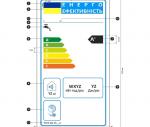
This Technical Regulation sets out the basic requirements for energy labelling of water heaters, storage tanks and sets of water heaters and solar equipment, as well as providing consumers with additional information regarding these energy-saving products.
The technical regulations apply to:
The technical regulation does not apply to water heaters:
The Ministry of Economic Development of Ukraine has adopted Technical Regulation on Labelling of Footwear Materials. As at 14 July 2019, the adopted TR has not entered into force. The TR will enter into force at the same time the existing TR on footwear labelling (adopted by Decree No. 632 of 9 June 2011) is repealed.
As of 20 April 2019, employers and the competent authorities (i.e. the state labour safety authority) are required to follow the revised procedure for the issue of permits for the operation of hazardous machinery and performance of hazardous types of work. A permit is issued by the State Labour Safety Authority (GosTrud) or its territorial branches.
As of 1 July 2019, employers are required to follow a revised procedure for the investigation of occupational accidents and illnesses (including acute poisonings).
The procedure sets out responsibilities and duties of the employer, head of department (foreman) and employees in case of an occupational incident or an illness. It also prescribes which forms must be completed (e.g. the N-1 form).
Occupational exposure limits, HS management, health and safety training, H&S management, occupational safety rules
Environmental liability, waste management, air protection, water management, hazardous substances management, dangerous goods transportation, use of chemicals…
Cosmetics, food, electronics, chemicals, clothing, textiles, other consumer goods
the Privacy policy.